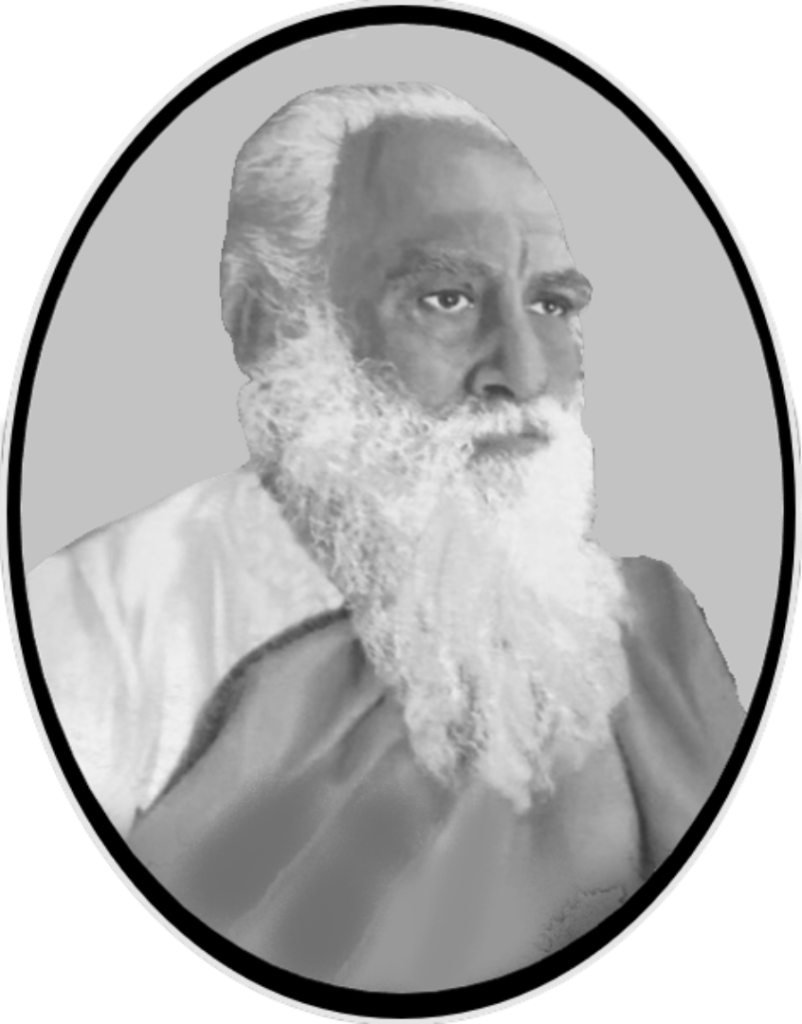
At Satyabadi
School
NILAKANTHA, THE YOUNG HEADMASTER (1909-1918)
ଏହି କୁଳେ ତବ ଜନମ,
ଆହେ ବୀର ସାମନ୍ତେ;
ଏ ଜନମ-ଭୂଇଁ-ଭକତି
ବହେ ତବ ଶୋଣିତେ ।
In this noble lineage you are born
O my brave warriors!
Devotion to your motherland –
Runs deep in your blood.
Nilakantha Das, Ramachandi Thare Rati , Konarke (1921)
Origins of Satyabadi Bana Bidyalaya
Gopabandhu’s Vision
Satyabadi Bana Bidyalaya, the most renowned educational institution in pre-independence Odisha, was the creation of Pandit Gopabandhu Das. Gopabandhu’s dream for the Satyabadi school began in 1909, following his visit to Ferguson College in Pune [Ref 1], and observing its nationalist environment, supported by leaders like Tilak and Gokhale. His goal was to train its students to restore Odisha’s lost pride.
Laying the Foundation with Nilakantha
It was often said that whatever Gopabandhu dreamt, Nilakantha worked tirelessly to make it real. Together, with big dreams and high spirits – and just a bullock-cart of bricks and two shovels, they laid the foundation of the school at Satyabadi. The chosen site (initially suggested by Bhakta Kabi Madhusudan Rao) near the Sakhigopal temple, about 10 miles from Puri, was a serene forest-like area lined with Bakula and Chhuriana trees.
Nilakantha as the Headmaster
At age 25, Nilakantha Das was appointed Kulapati (Headmaster) of the newly formed school. He was a brilliant Ravenshaw College graduate with honours in Chemistry [2]. But to prepare for the demands of this new role and to widen his outlook, he left for Calcutta to pursue his M.A. in Philosophy. He returned to Satyabadi in 1911, when the school had only 19 students.
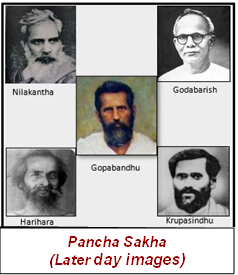
The Pancha Sakha of Satyabadi
Other remarkable persons soon joined the school. They were: Acharya Harihara Das, Pandit Krupasindhu Mishra, and Pandit Godabarish Mishra. Gopabandhu and Nilakantha, along with these three illuminaries, came to be revered as the ‘Pancha Sakha’ (Five Friends) of Satyabadi, echoing the five revered saint-poets of medieval Odisha. [3]
The decade from 1911 to 1921 is renowned
in Odisha as the “Satyabadi Era.”
Running the School without Government Support
Financial Challenges
Satyabadi School never received any financial grant from the British government. Its progressive ideals and activities were perceived by the government as revolutionary – working against colonial authorities. So, Gopabandhu had to secure funding for this private institution from the princely states, zamindars, and other influential philanthropists, a responsibility which frequently kept him away from the school. Nevertheless, he remained intimately involved, ensuring nothing transpired without his full knowledge and consent.
Daily Operations: Entrusted to Nilakantha
As Gopabandhu was often absent, the day-to-day administration of the school and the welfare of its students were entrusted to Nilakantha. Beyond establishing the curriculum, procuring course books, conducting classes, and overseeing examinations, he was committed to the welfare and holistic development of each student. To this end, Nilakantha instituted several pioneering initiatives mentioned below.
Innovations for Integrated Development
- Skill-based Learning: Courses such as fencing, carpentry, and gardening were offered to build physical strength and practical skills — unusual for schools of that era.
- Student Magazine & Debate: A monthly student magazine, aptly named Satyabadi, was published at the school. It offered students and teachers a platform to express their views on contemporary issues. Nilakantha often edited and contributed articles, encouraging intellectual curiosity.
- Academic Resourcefulness & Innovation: To enrich the school’s offerings, and yet overcome funding challenges, Nilakantha studied new subjects — Botany, Drawing, Drafting — so he could teach them himself.
- Affordable Educational Materials: Because textbooks were scarce and expensive for most Satyabadi students, Nilakantha wrote many books himself, including: Udvida Bigyana (Botany), English grammar and Translation, and Model Drawing Book (ray tracing / light).
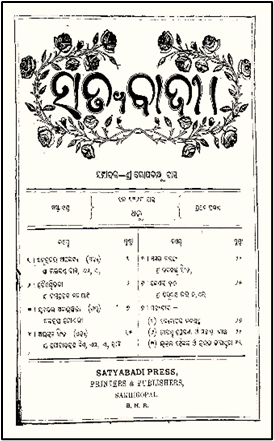
Nilakantha also wrote the daily prayer songs for the students at Satyabadi. Some of those songs were later compiled into a book named BhaktiGatha.
Educational Excursions and Social Work
- Learning the Past at Historical Sites: Long before “school excursions” became common, Satyabadi teachers took students to heritage sites like Konark, Bhubaneswar and Khandagiri. These trips awakened pride in Odisha’s history, art, and maritime legacy in the students’ young hearts.
- Nilakantha’s poem Ramachandi Thare Rati O Sakala, the first part of his celebrated kavya Konarke, (where a teacher narrates Odisha’s past glories to students sheltering near the Konark ruins on a thunderous, rainy night) beautifully reflects this spirit.
- Helping the Sick: Nilakantha, along with his students and other teachers often helped sick men of the near-by villages with homeopathy medicine and other assistance – reinforcing compassion and community responsibility.
The School as a “Man-Making Factory”
Breaking Social Barriers
In a radical move for its time, children from all castes and socio-economic backgrounds lived, dined, and studied together in the school, long before Mahatma Gandhi’s advocacy against untouchability. Its angered the orthodox Brahmins of the area, who tragically set fire to and burned down the school. It also destroyed its much-coveted Harihara Library – named after renowned Pandit Harihara Das Sharma of Sri RamaChandraPur, the founder of the Sanskrit University in Puri (and an ancestor of Nilakantha).
Rising From the Ashes
Undeterred, Nilakantha and other teachers immediately resumed classes the very next day in the open expanse of the surrounding Bakula Bana. Later, a permanent brick building was constructed for the school. The institution evolved into a high school, initially affiliated with Calcutta University, holding its first matriculation exam in 1914.
Compared to Nalanda
Satyabadi School soon became renowned as a man-making factory, producing many distinguished persons of the era. They joined the freedom movement in India, and later served Odisha and India with distinction. The school’s operations and its profound impact was recognized by many leaders of the time.
Utkal Gaurav Madhusudan Das famously said to Gopabandhu: “You have created a Nalanda here.”
Gopabandhu replied:“Not I — Nilakantha.”
Leaving the Headmaster Post
In 1918, Nilakantha stepped down from the position of the school’s headmaster so that other prominent teachers there would be able to implement their own visions for the school and guide the students accordingly. As the school superintendent position was affiliated with the position of the headmaster, he also gave up that responsibility, but remained at the school as a teacher until 1920 – commuting daily from his home less than two miles away.
References and Additional Reading:
- Ferguson College – NabaBharat magazine (TBD)
- Nilakantha took Chemistry Hons. in B.A., instead of his preferred subject Sanskrit, to help Ravenshaw College strengthen its newly approved Science program.
- The five poets of medieval Odisha were: Achyutānanda Das, Ananta Das, Jasovanta Das, Jagannātha Das, and Balarāma Das
- Atma Jeevani – Pandit Nilakantha Das
Other Readings:
- Satyabadire Sata Barsha by Sri Chandra Sekhar Misra – provides eye-witness accounts by the author, who was first a student and later a teacher at the Satyabadi school.
- Satyabadi Bana Vidyalaya, A case study by Abhishek Panda
- https://indianculture.gov.in/node/2820570
NILAKANTHA’S LATER ROLES (1918 -1920)
In 1918, Nilakantha stepped down from the positions of the school’s headmaster and its (affiliated) superintendent, as the headmaster’s position was made a rotating one among the school’s talented teachers. However, he remained at the school as a teacher until 1920, commuting from his home less than two miles away. There, he spent his spare time studying ancient Sanskrit and Odia compositions, and writing some of his most famous books, such as Konarke and Arya Jeevan, as well as some of his children’s books.
Satyabadi’s fame attracted many outstanding visitors, from both within and outside Odisha, including Sir Ashutosh Mukherji, the Vice Chancellor of Calcutta University. Deeply impressed by Nilakantha’s brilliance, Sir Ashutosh invited him to join the Presidency College as a professor of Oriya and Comparative Philosophy.
Following Gopabandhu’s advice, Nilakantha departed for Calcutta in September 1920, intending to return to the school in two years. However, he resigned from the professorship after only three months to dedicate himself fully to the Indian Independence Movement, and to the vital cause of uniting the Odia-speaking regions, then scattered across various British Presidencies, into one independent state.
The End of the Era, but Not Its Spirit
Decline of Satyabadi School
As its leading teachers were drawn into national service, including the Indian Independence Movement, Satyabadi School gradually declined. Yet its legacy lives on at the historic Bakula Bana site, where statues of the “Pancha Sakha” stand today.
“Satyabadi is not yet history for me!”
Reflecting late in his life, Nilakantha wrote in his autobiography: “Satyabadi is not yet history for me!” [Ref 4] It is a powerful reminder of how deeply the school shaped him, and it helped him shape the future of Odisha.
The Resting Place: with the Pancha Sakhas
Cremation at Sakhigopal
Upon his passing on 6 November 1967, Nilakantha was cremated with full state honors at Sakhigopal, beside the memorials of his dear Satyabadi colleagues. All five of the Pancha Sakhas were laid to rest in the Bakula Bana (a testament to their lifelong bond), with commemorative Samadhis erected for each.
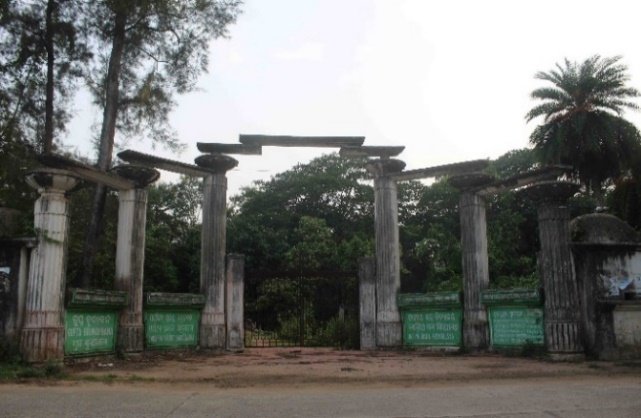
Bana Bidyalaya – SakhiGopal
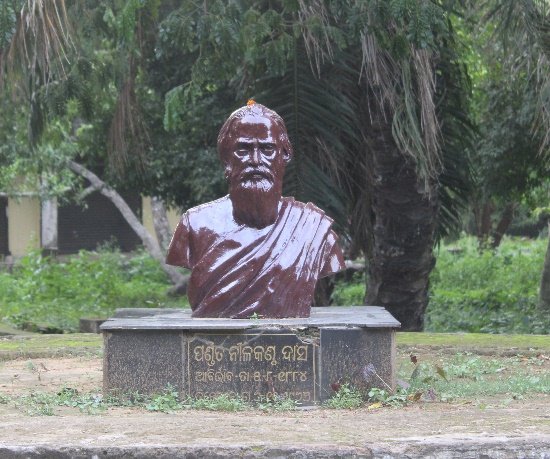
Satyabadi Bakula bana
( https://commons.wikimedia.org/w/index.php?curid=70330428 by Chinmoyee Mishra )
The Resting Place: with the Pancha Sakhas
Inscribed on Nilakantha’s Samadhi are lines from his poem Ramachandi Thare Rati, the opening section of Konarke, expressing the maritime pride of ancient Odisha.
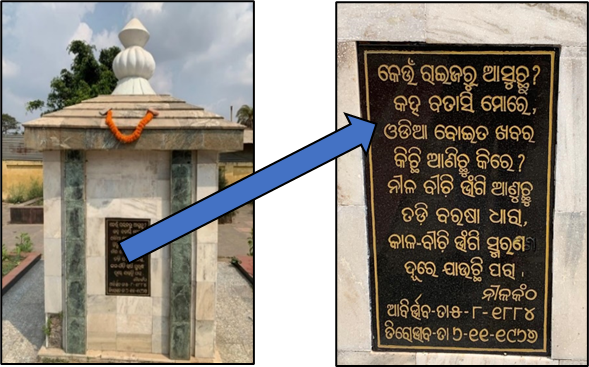
The poem translates to English as follows:
“Oh! sea gale, do tell me, from which land have you come?
Do you carry tidings of Odia ships from that part?
As you drive these rains, sweeping the blue ocean waves,
On the ripples of time, my memory drifts to that past!”
A TEACHER’S DEVOTION
--- “I wish to die in a teacher’s chair” --- Nilakantha Das, 1915
Nilakantha: Building the Satyabadi Ideal
Recognition by Madhusudan Das
The renowned Utkal Gaurav Madhusudan Das, upon visiting Satyabadi School between 1909 and 1921, was deeply impressed by its pedagogical approach and operational excellence. Madhu Babu effusively praised Pandit Gopabandhu Das, crediting him with establishing a modern-day Nalanda at Satyabadi. Gopabandhu, in turn, humbly attributed this achievement not to himself, but said: “Not I, Nilakantha.”
Indeed, there was a profound truth in Gopabandhu’s statement
Gopabandhu’s Vision and Nilakantha’s Daily Role
Satyabadi was undoubtedly Gopabandhu’s brainchild, and he remained the school’s overall manager, approving all major decisions. However, his extensive social and political commitments, as well as efforts to secure funds for this private school (with minimal tuition fee), frequently took him away from the institution. Consequently, he entrusted the daily running of the school to his right-hand man, young Nilakantha Das.
While Nilakantha consulted Gopabandhu on all critical school matters, his own indelible mark was evident in every aspect of the school’s operation. His paramount objective was to cultivate the next generation of students who would elevate Odisha to new heights. Every thought and action of his life at the school revolved around this singular dream, driven not only by his profound love for his motherland but also by an equally deep affection for the young students he wanted to be exemplary in every respect. It was akin to the unwavering, inward-flowing love of a righteous father for his sons.
Beyond Nilakantha’s expected proficiency in literature, philosophy, history, and Sanskrit — achievements based on his M.A. degree from Calcutta University in those days—Nilakantha also possessed deep knowledge in Mathematics and Chemistry. [1] To impart this vast knowledge and turn his students into great citizens, he adopted numerous innovative approaches, some of which are described below:
A Life of Simplicity and Total Commitment
As headmaster, from 1911 to 1918, Nilakantha chose to reside at Satyabadi School, dedicating all his time to his students, unencumbered by family distractions, despite his young family living within walking distance from the school.
A Scholar’s Austerity
A Bengali journalist, visiting Satyabadi school, described Nilakantha’s exceedingly simple life as follows [2]: “He (Nilakantha) lived in a small thatched room furnished with only a single bed and a table, which were invariably covered with books of every genre—modern and ancient, Odia, English, and Sanskrit. The sole decoration was a picture of Swami Vivekananda on the wall. Here, Nilakantha spent his waking hours immersed in his own studies, meticulously selecting books for the class library, and writing articles for the school magazine, often sleeping only a few hours each night.”
Students’ View
This personal sacrifice underscores his singular focus on student development. Reflecting on this dedication, one of his students later wrote: “The headmaster was trying his best to make a concoction of all that knowledge, and shove it through our throats, overwhelming us nonetheless.” [3]
Innovations in Teaching
The Satyabadi Class Library – A Novel Approach
The concept of a class library was pioneering at Satyabadi School. Each classroom featured a large bookshelf stocked with grade-appropriate books. Nilakantha personally read and selected every book to ensure the holistic intellectual development of the students. A unique system was implemented: a child would borrow a book for ten days, and upon its return, the classroom teacher would quiz him on its contents. Should a student fail to answer adequately, the book would be re-lent for another ten days for further study, reinforcing a culture of deep engagement with reading.
Writing Books for Students When Texts Were Not Available
During that era, many essential textbooks for state examinations were either scarce or prohibitively expensive for many Satyabadi students. So, to facilitate student learning, Pandit Nilakantha, with his remarkable ability to master new fields delved into various subjects and authored his own books. To reduce the cost of teacher training, for instance, he studied Optics (behaviour of light) and compiled the Model Drawing Book, which was subsequently adopted by the School Inspector Mr. Macombe for use across all schools. [4] Beyond this, Nilakantha penned books on diverse subjects such as Botany and English grammar and translation, all tailored to meet the specific needs of his students.
Nurturing Students’ Inner Growth
Morning Prayers and Bhakti Gatha Prayer book
Through the daily prayers he instituted at Satyabadi School, Nilakantha aimed to cultivate the spiritual awareness and self-realization of his students, guiding them in the quest for true knowledge. He composed most of these prayer verses himself, many in Sanskrit. Other teachers could also contribute with his approval. These were later compiled and published in his book, Bhakti Gatha.
One profound stanza, translated from his work in Bhakti Gatha, eloquently captures his philosophy:
ଗଉର, ଶଙ୍କର, ବୁଦ୍ଧ ଲୋଡା ନାହିଁ ମୋର; ନାହିଁ ଲୋଡା ପୁରାଣର ପ୍ରଥିତ ବଚନ;
ପାତଞ୍ଜଳ ନୀତିତନ୍ତ୍ର, ଚାର୍ବକ ଚହଳ; ସମାଜର ବିଧିବଦ୍ଧ ଧର୍ମ ଅନୁଷ୍ଠାନ;
ତୁମ୍ଭରି ଜଗତ ଭାସେ, ପ୍ରକୃତିର ଚାରୁ ହାସେ, କେମନ୍ତେ ଦେଖିବି କହ ସେ ହାସ ନିଦାନ?
(I don’t need Gaura, Shankar, Buddha, nor the Puranas’ hallowed verse I crave;
No Patanjali’s discipline, nor Charbak’s reasoning wave,
Nor society’s countless, structured faiths do I embrace.
But tell me, how to find Your loving grace, amidst the world’s vast wonders,
in nature’s every space?)
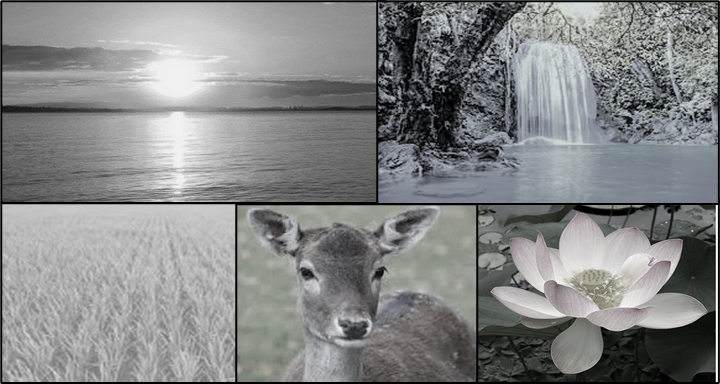
(In this prayer, which revealed the depth of his mind and the purity of his heart, Nilakantha gently guides children to look beyond ritual and doctrines, but to seek truth with sincerity, humility, and an open intellect. By directing them toward the divine presence in nature, in wonder, and in everyday life, he encouraged a form of learning rooted not in blind acceptance but in honest inquiry and inner clarity. It was the outlook of a teacher who wished not only to educate, but to awaken in every student a love for truth and a lifelong habit of thoughtful reflection.)
Encouraging Curiosity Beyond the Classroom
The Satyabadi Magazine
The school magazine, Satyabadi, often edited by Nilakantha during Gopabandhu’s absence, served as a vibrant platform for intellectual discourse. It consistently invited articles from students, encouraging new ideas and open discussions, alongside thoughtful contributions from Nilakantha, Godabarish Mishra, and other teachers.
Educational Excursions: Connecting Students to Heritage
As mentioned elsewhere, at a time when the term ‘excursion’ was virtually unheard of in Odisha, Nilakantha and other Satyabadi school teachers regularly organized trips for students to nearby sites, such as Konark, Bhubaneswar, and Khandagiri, of immense historical significance. During these journeys, they narrated tales of Odisha’s glorious past—a prosperous land excelling in art, architecture, literature, and maritime trade, governed by brave, pious, and dutiful kings. These trips were not merely educational; they were designed to instill a deep sense of patriotism and pride in the young minds.
Love for Students – As Reflected in Nilakantha’s Writings
Despite his often grave and stern demeanor, Nilakantha harbored a profound paternal love for his students, a sentiment vividly revealed in his writings. In a letter (dated May 1915) to his good friend Mr. Sushil Chandra Dey, he said:
“The more I gather experience as a teacher, the more I like to be with children.
I wish to die in the chair of a teacher. Always bright sunny faces around me, I live in a fairy world.”
Ramachandi Thare Rati o Sakala: An Exceptional Testament
Nilakantha’s deep affection for his students is profusely evident in many parts of his writing called “Ramachandi Thare Rati o Sakala” (the first part of his famous book Konarke), a work unparalleled in literature for its portrayal of teacher-student bond. For instance, there teacher Nilakantha expresses to his young students:
ଏ ଯେ ମଧୁଭାବ ସେନେହ ପୀରତି ହୃଦୟେ ରଖିଛ ଭରି
କଣିକାଏ ତହୁଁ ଦିଅନ୍ତ ତେବେ ଏ ପରାଣ ଯାଆନ୍ତା ପୁରି ।
All this sweetness, love, and affection that you carry within,
if you would spare a drop of that for me, my heart would burst with joy.)
Moreover, at the very beginning of this epic poem, one senses Nilakantha’s poignant sadness for the young students spending a stormy night near the Konark temple on Kumar Purnima — the most festive day of the year — when they should instead be adorned in new clothes, and pampered by their mothers and sisters. In his characteristic manner, Nilakantha then embarked on a momentous mental journey with his students, vividly recounting the remnants of Odisha’s ancient glories. Through these narratives, he sought to ignite their patriotic fervor and inspire them to reclaim the lost pride of their beloved motherland. A book of such profound pedagogical and emotional depth is rare in the literary traditions of Odisha or India.
Students’ Profound Respect and Affection in Return
Although many students held Nilakantha in awe during their youth, as they matured, their awe transformed into profound respect and admiration for their guru. Many prominent individuals, including Dr. Sadashiv Misra (former Vice Chancellor of Utkal University) and Prof. Chintamani Das of Khallicote College, Berhampur, among others, have eloquently expressed their high esteem for their legendary teacher.
For example, in an article titled “Sri Guru Smarane” [Ref. 5], another student vividly recounts his immense pride when Pandit Nilakantha was challenged to deliver a lecture in Sanskrit at the 1933 Bihar-Orissa Pundit Sammilani in Puri. Despite the initial skepticism of the assembled Sanskrit Pundits, they could not find a single flaw in Nilakantha’s 45-minute Sanskrit discourse. Ultimately, these renowned scholars blessed Nilakantha for his extraordinary talent, a testament to his unparalleled scholarship and the profound impact he had on all who witnessed that. (Other such articles will be found in the Nilakantha Smarakis.)
Many of his other students, who became famous in their own time, used to refer to Nilakantha with great love and pride as Our Headmaster, probably thinking of a young, impatient man reading important books all night in lantern light, in a small cottage, to build the next generation of Odia youth!
References
[1] Nilakantha had pursued Chemistry Honours in B.Sc., a subject entirely new to him (instead of his cherished subject Philosophy), to prevent the newly established Science department at Ravenshaw College in 1907 from closing due to lack of students. A few other students then joined him in this admirable goal.
[2] Manishi Nilakantha – Professor Chintamani Das, Pg. 27
ibid – Pg. 26
[3] Satyabadire Saata Barsha – Sri Chandra Sekhar Misra
[4] Atma Jeebanee – Pandit Nilakantha Das
[5] Nilakantha Smaraki, Volume 1 – Sri Lakshman Mishra, Pg. 53