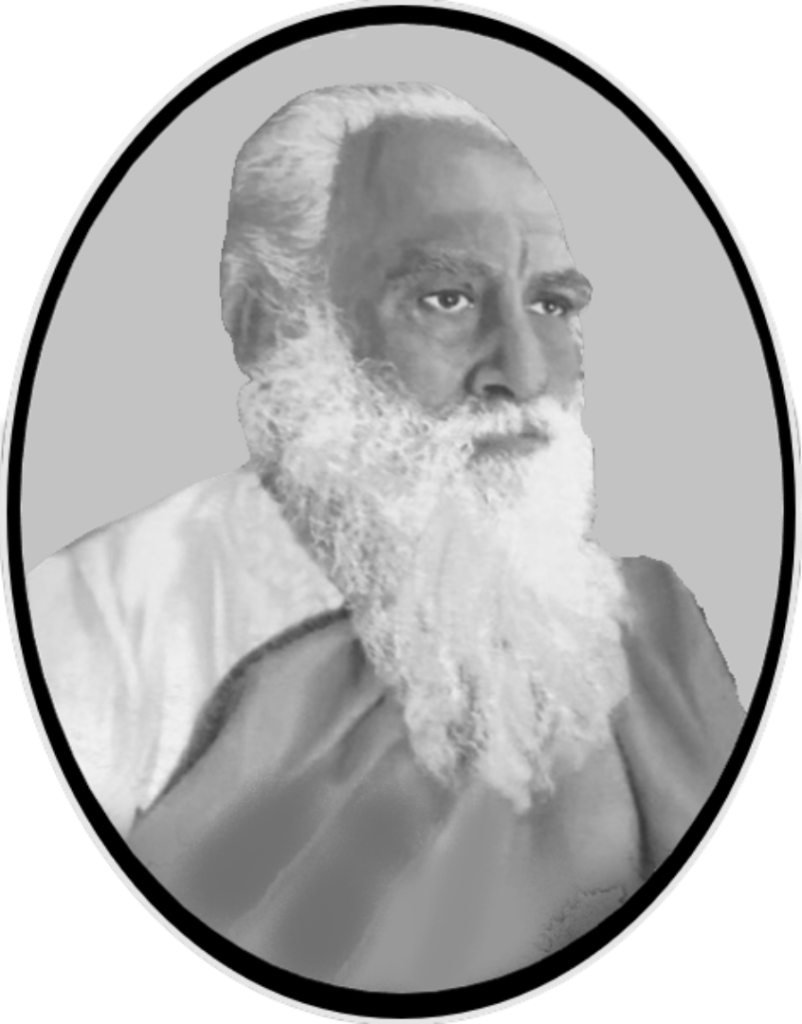
In Creation of
Independent
Odisha Province
NILAKANTHA’S RESOLUTION IN DELHI PARLIAMENT
I stand here not for a language alone,
but for a language linked to a culture….
A distinct culture, which has something to give
to the federal nationality of India.
Pandit Nilakantha Das, demanding Independence Province status for Odisha on linguistic basis at Delhi Parliament – Feb 8, 1927
It is impossible to experience national pride without knowing the nation’s glory:
Pandit Gopabandhu Das, June 1927
Background: The Partitioning of Odisha under the British
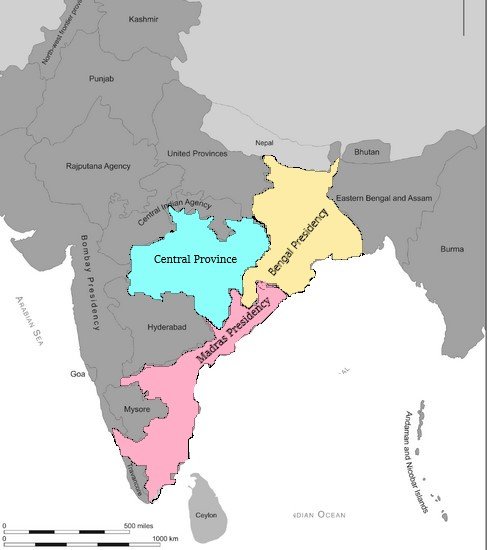
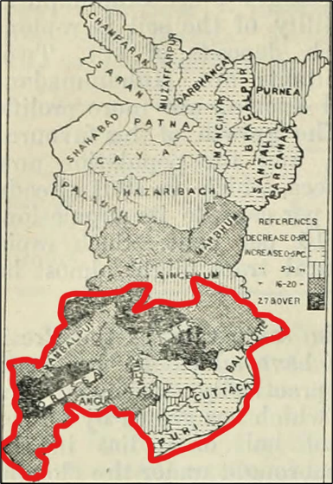
As the British conquered Odisha in segments, due to fierce resistance from Odia fighters, they decided to keep the land divided under the control of its neighbouring provinces or Presidencies: Bengal, Madras, and the Central Provinces. Odias thus became minorities in their own land and lived under non-cooperative administrations, where all official and educational activities were conducted in different, unfamiliar languages.
Odisha (then called ‘Orissa’) referred only to the coastal region. Later in 1905, the Sambalpur district was added to it. In 1912, this dismembered region was removed from Bengal and added to Bihar, to form the Bihar-Orissa province. With no political and economic support, no unity, no representation in the Central Assembly, and exploitation by those in power, Odias gradually lost their spirit and pride – until Fakir Mohan Senapati (1843–1918), through his powerful and satirical writings, awakened them to the erosion of their language and identity.
Efforts to Create Odisha Subprovince with Amalgamated Odia Regions
After his return from Calcutta in 1881, Utkal Gaurab Madhu Sudan Das was the first person to make a concerted and organized effort, through his Utkal Sammilani platform, to unite the Odia-speaking regions and form a single sub-province; to be administered under a full province (most likely Bengal) . Pandit Gopabandhu and many other young leaders lent their full support to it.
The reasons for seeking a subprovince, rather than a full province, were:
• Establishing the Linguistic provenance of all Odia regions annexed to neighbouring states
• Lack of awareness of the situation, and limited desire among uninformed Odias to unite as one province
• Concern about the Economic viability of Odisha as an independent province
• Unwillingness of neighbouring states to release the territories annexed to them
• No representation at the Central Legislative Assembly in Delhi to present the issues, and work with the British Government (after 1919 AD)
Nilakantha’s Journey to Delhi - for an Independent Odisha Province
A scholar by training, Nilakantha was well-versed in Odisha’s linguistic inheritance, broad cultural and religious outlook, and unique maritime history. Although he was an ardent supporter of Madhu Babu and Gopabandhu, he believed that the above problems, especially points 1, 2, and 5 could be addressed through sustained efforts, and economic viability would eventually be achievable with some initial support from the Government.
To pursue his goal, he decided to go to the Central Legislative Assembly in Delhi to plead for Odisha’s case himself.
So, while imprisoned in the Hazaribagh jail in 1923 for participation in Gandhiji’s Non-Cooperation movement, he discussed the matter with his mentor Utkalamani Gopabandhu Das. He then contested the election, and was elected to the Delhi Central Assembly (Parliament), as a member of the Congress/Swaraj Party.
Thus began Nilakantha’s strenuous journey towards the formation of a Linguistically-based Independent Odisha Pradesh.
The Historic Resolution of February 8, 1927
On February 8, 1927, in the Central Legislative Assembly, Pandit Nilakantha Das moved the resolution demanding the unification of all Odia-speaking tracts into a single administrative unit.
In this memorable speech, based upon his deep knowledge of Odisha’s history, culture, and civilizational continuity, he stated clearly that Odisha’s demand was not merely a linguistic one (there were more than 670 languages spoken in India at the time), but an appeal for justice to a people who shared a common culture, common history, and a distinct identity shaped by Jagannath Dharma.
Odisha, he argued, had once been a great cultural region. Fragmenting it had harmed not only its administration but also the spirit of the Odia people. (A part of his speech is shown at the beginning of this article).
The Withdrawal
However, before the time came to vote, Sir Alexander Muddiman – the Home/Finance Minister of the Government of India and previously the Governor of Bengal, Bihar, and Orissa – privately advised Nilakantha to withdraw the resolution, explaining that:
• The British Government feared that conceding Odisha’s demand would open the door to other linguistic demands for new provinces, and it did not wish to bear the associated costs.
• The neighbouring provinces, to which Odia-speaking regions were annexed, were unwilling to relinquish these tracts and therefore would not support the resolution.
Recognizing that the time was not yet ripe, Nilakantha withdrew the motion – however, the intended effect had already been achieved. His speech was widely published in many leading newspapers across India, with their support, and Gopabandhu proudly spoke about it to the people of Odisha.
From that day onward, the process was set in motion, and Odisha’s claim could no longer be ignored.
Later Efforts
Although Nilakantha withdrew resolution upon the advice of Mr. Muddiman, the enthusiasm and efforts to make Odisha an independent province, with initial financial support from the Government, continued with renewed determination. After Gopabandhu’s death a year later, a lot more responsibility fell upon Nilakantha, who succeeded him as the President of the Utkal Pradesh Congress Committee (UPCC).
These later developments are discussed in this section, in the article titled Hurdles and Success.
CULTURAL VICTORY IN UNITING SOUTHERN REGIONS
Kalinga Dibasa (June 1927)
As the impact of Nilakantha’s speech spread nationwide, enthusiasm grew among the Odia-majority regions annexed to the Andhra/Madras Presidency, namely Ganjam and Koraput, to rejoin Odisha. But the politicians there did not want to concede the areas to Odisha, and they challenged the cultural and linguistic basis of Odisha’s claim to these regions. To settle the question and prove that the entire ancient kingdom of Kalinga had always been culturally a part of Andhra, Andhra arranged a major debate with Odisha in Mukhalingam on July 16-17, 1927, and referred to it as the Kalinga Dibasa.
The Mukhalingam Debate
On the Andhra side of the debate stage were Telugu scholars, supported by historians and anthropologists from Madras, who argued that Ganjam and Koraput were always culturally closer to Andhra; on the other side was Pandit Nilakantha Das, representing the Odias, at the behest of Ganjam area’s most erudite leaders.
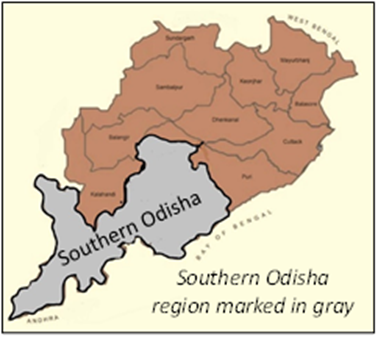
The Andhras side based their claim on superficial linguistic similarities. But Nilakantha presented a deep, well-researched paper (which he prepared in only two-weeks time) to support his argument. There, he demonstrated that the centre of Kalinga region was Puri, not Andhra; extrapolated the Jagannath tradition to the southern regions; and traced the historical connections that bound these areas to Odisha for centuries.
The Mukhalingam debate was a striking victory for Odisha, as the observers on both sides acknowledged that the cultural foundations laid by Pandit Nilakantha were strong and convincing. It marked a significant moral and intellectual turning point in the movement; it energized the Odias of Ganjam and Koraput, who now supported unification with renewed confidence, and revered Nilakantha for his role.
(Nilakantha’s Mukhalingam speech, titled “A Short Review of the History of Kalinga” was then published by the Andhra Historical society in its entirety, and is also included in this Website. (TBD: Link to article in e-lib). A summary of the speech is provided in this menu section (TBD: Link here).
INDEPENDENT ODISHA PROVINCE: FINAL SUCCESS
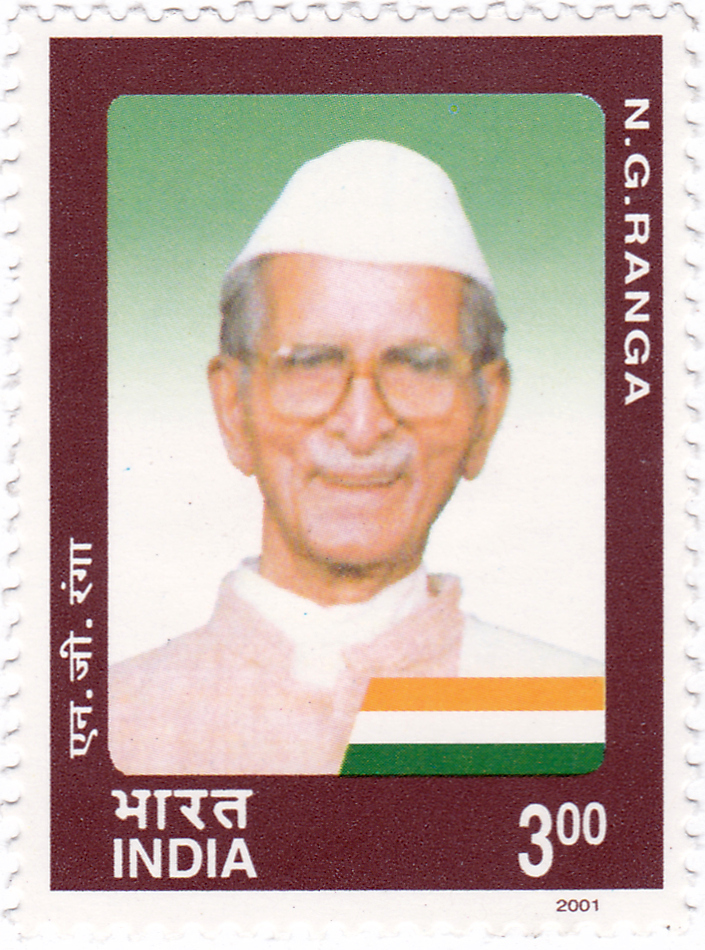
One might note here that the Congress leaders of Andhra were unsuccessful in forming Andhra an independent province by submitting to the high commands at the Center, rather than following the maneuvers similar to Pandit Nilakantha’s, who could make it possible for Odisha a decade earlier.”
Even though Pandit Nilakantha withdrew his historic resolution, introduced on the floor of the Central Legislative Assembly on Feb 8, 1927 to make Odisha a fully independent province on linguistic and cultural basis, he continued his efforts through other official channels. He remained optimistic that Odisha’s finances could be managed with an initial, one-time Government support of 80 lakh rupees.
He firmly rejected the idea of Odisha being made a subprovince attached to a neighbouring province—much as Andhra remained attached to Madras for a long period.
Odisha: Pursuing other Official Channels
- The Simon Commission
The Simon Commission arrived in India in Feb 1928 to study constitutional reforms, but it was promptly boycotted by the Indian National Congress (INC). However, Madhu Babu and other Odia leaders met the Commission in Patna and submitted a memorandum outlining Odisha’s demand. Pandit Nilakantha Das assisted in preparing the memorandum and its justifications, as he had done earlier, but did not defy INC‘s decision by appearing before the Commission itself.
After reviewing the memorandum, the Simon Commission expressed a favourable opinion towards the creation of Odisha as an independent province.
- The Atlee Report and Approval
The Attlee Committee, an offshoot of the Simon Commission, recommended the creation of Odisha as a separate full province under the proposed Government of India Act, 1935. This recommendation brought to fruition the sustained efforts of Pandit Nilakantha Das, other leaders, and the long-cherished aspirations of the Odia people. However, further hurdles and disappointments still lay ahead.
- The Boundary Commission – and a Major Disappointment
Based on the recommendations of the Simon and Attlee Commissions, the O’Donnell Committee—also known as the Boundary Commission—was formed in 1931 to demarcate the boundaries of Odisha, based on testimony from the Odisha Pradesh Congress Committee (UPCC) and local populations.Pandit Nilakantha Das, then President of the UPCC, travelled to Jamshedpur on January 10, 1932, with detailed memoranda to testify in favour of merging the Shadheikala and Kharasuan regions with Odisha. Due to extensive canvassing by Odia leaders, local support for the merger was strong.
However, following the failure of the Second Round Table Conference just then, the Indian National Congress was declared illegal by the British Government. Acting on instructions from Dr. Rajendra Prasad, the Congress Zonal Head, Nilakantha refrained from testifying before the Boundary Commission. As a result, these regions were permanently lost to Bihar.
- O’Donnell Report: Victory Tinged with Disappointment
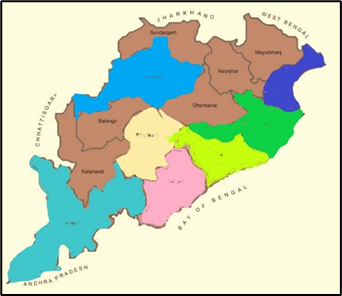
After generations of struggle, on December 12, 1932, Odisha had the approval of the O’Donnell Committee for its formation as an independent province. However, the Paralakhemundi region and the Jeypore area of Koraput were excluded from the approved boundaries. At the time, Pandit Nilakantha Das was imprisoned and in poor health, which limited his ability to intervene in this matter.
- The End of the Journey and the Cherished Victory
Following his release from jail, Pandit Nilakantha Das advised a delegation of fourteen prominent leaders of Odisha, who met the British Viceroy Lord Willingdon in Shimla on September 16, 1933. Upon further deliberation, the previously excluded regions were finally included, and the Odisha Province as it exists today was created with an initial sanction of 40 lakh rupees.
(The British Government had to divide Nilakantha’s originally proposed grant of 80 lakh rupees between Odisha and Sindh, which was also created at the same time, though on religious grounds.)
6. Creation of Utkal University
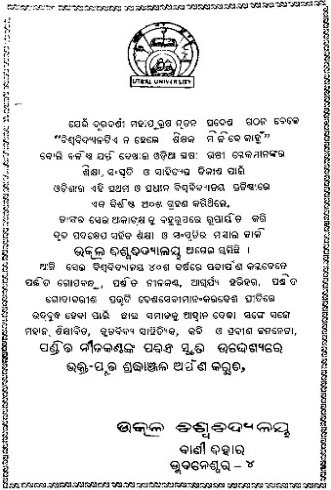
At the time of Odisha’s formation, the province did not have funding for establishing a university. Knowing an independent state required its own institution of higher learning, Nilakantha soon requested the Indian parliament (of which he was a member till 1945) for financial support to establish a university.
In 1938, Nilakantha chaired the official committee responsible for preparing a detailed plan for the establishment of Utkala University (drawn on his earlier experience as a member of the Delhi University senate) and submitted its report. Based on that report, and with Maharaja Krushna Chandra Gajapati Deo as the Chief Minister of Odisha, and Pandit Godabarish Mishra as Education Minister, Utkal University was formally established in 1943.
Thus, regarding the Formation of the Independent Odisha Province, it might be said that:
“Madhu Babu conceived the idea,
Gopabandhu carried it forward,
and Nilakantha nurtured it,
until Odisha Province became a reality on April 1, 1936.”
Reference Articles:
- Eminent Parliamentarian Monograph Series #4 Pandit Nilakantha Das, Published by Lok Sabha Secretariat, New Delhi 1990
- Atma Jibani, Pandit Nilakantha Das, Published by Cuttack Student Store, Cuttack (4th edition, 2014)
- Pandit Nilakantha O Tanka Pratibha Dr. Satyanarayan Rajguru, (Pandit Nilakantha Das Smaraki Bakrtuta Mala #3, Published by: Utkal University, 1983)
- Pandit Nilakantha Das as an Architect of Orissa Province, Shriram Chandra Dash, Sansad Bichara, (Pg 21-26), 1991
- Story of Creation of a Separate Province or Modern State of Odisha, History of Odisha, 2018
- Pandit Nilakantha Das, Life and Achievements, Lila Ray, Published by Nilakantha Smruti Samiti, 1985
- Swatantra Odisha Pradesh Gathan O Nilakantha – Dr. Nibedita Mohanty, Swatantra Odisha Pradesh Gathanara Anyatama Shestha Bindhani (Pg 52-69), Published by Nilakantha Smruti Samiti, 1993
- Pandit Nilakantha Das, The Legislator – Harihara Mishra Ph. D. Thesis, Pg 83 (From Gandhi to Nilakantha Das, Ashram, 20 June 1928 – from a microfilm S.N., 13436)
- Madhusudan’s Paradigm on Nationalism in a Regional Setting Odisha Review, 2006
- Pandit Nilakantha Das – Professor N. G. Ranga, Lecture at Rourkela on 11.4.87 (Translated to Odia: Swatantra Odisha Pradesh Gathanara Anyatama Shestha Bindhani: Pg 13-23)
- Manishi Nilakantha – Professor Chintamani Das, Published by Nilakantha Smruti Samiti, 1982 Nilakantha Das (Wikipedia Article)
MAIN LEADERS AND TIMELINES OF ACTIONS
This section provides a clear picture of the roles of the three main leaders: Utkala Gaurab Madhusudan Das, Utkalamani Gopabandhu Das, and Pandit Nilakantha Das, whose visionary and selfless work resulted in the formation of an Independent Odisha Pradesh in 1936.
It also presents timelines of key political events in which they played leading roles while working towards this common goal.
It must be clearly stated here that the Formation of Independent Odisha Pradesh was not the sole effort of these larger-than-life personalities. Many local leaders in Odisha also contributed in important ways. Notably among them was the Maharaja of Paralakhemundi, Shri Krushna Chandra Gajapati Deo, who worked on multiple fronts – including providing financial support and leading teams to meet British officials – to help make this a reality.
Click the following buttons for detailed information.