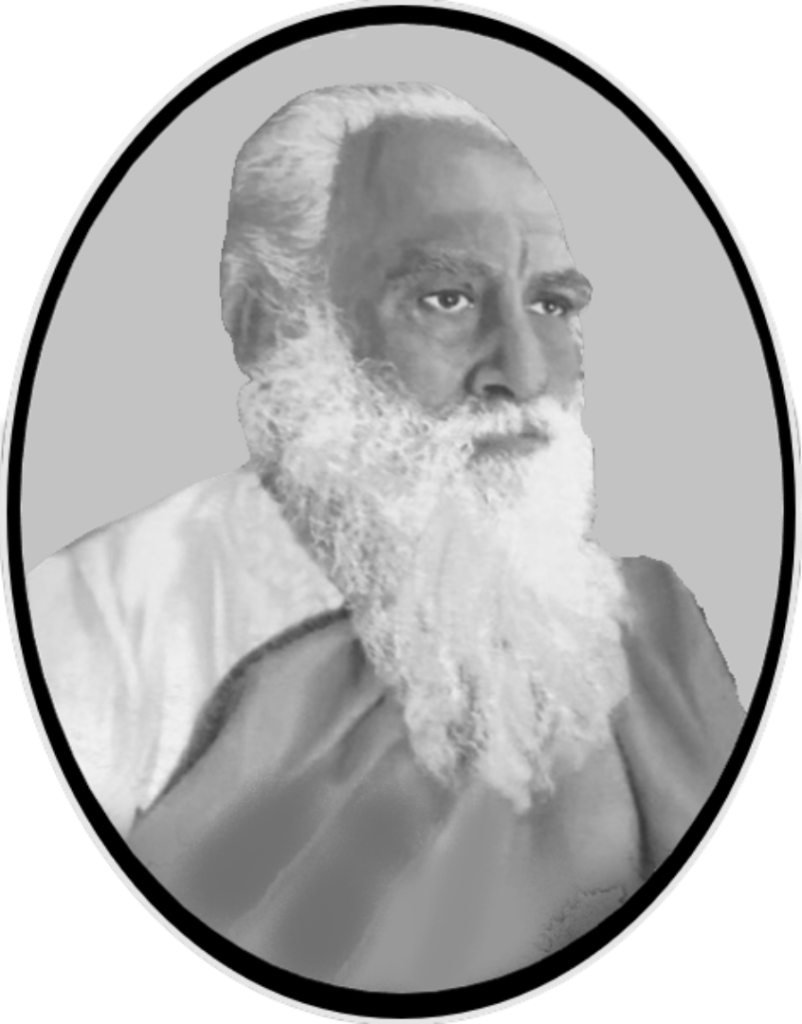
The Reformer
and
The Journalist
NILAKANTHA DAS: A SOCIAL REFORMER
Even though Nilakantha lived in a very different time, the way he thought is relevant at every age and for every society. He advocated for reform – with courage, honesty, and fairness – when he felt something was unfair, untrue, or illogical. He believed in observing, questioning, and understanding things for himself, rather than blindly following others. Nilakantha’s life story is not just a story from the past, but a guide for how to remain truthful and thoughtful even in today’s world.
Early Convictions and Independent Thinking
Pandit Nilakantha Das was a person of profound conviction; always following logic and evidence before accepting any belief – a trait evident even from his high school days. He was one of the very few people of the time who would go against the tyrannical attitude of the Brahmins in the society, even though he himself came from the most esteemed Brahmins of Odisha – the Sashani Brahmins of Puri.
From School Days: The Courage to Question
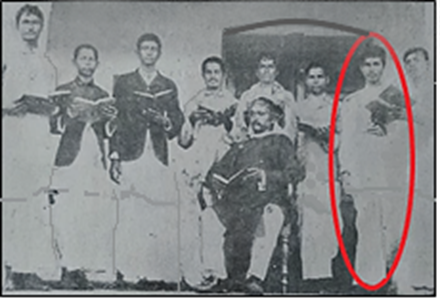
When Nilakantha was a student at Puri Zilla School, he was inspired by an English poem depicting a Village Church, and decided to go to a local church to observe the worship firsthand. He did so despite the risk of punishment from the Brahmin teachers for such “unreligious” conduct. But the headmaster, Mr. Chandra Mohan Maharana, after hearing Nilakantha’s logical reasoning on the advantages of direct observation vs. indirect description of any subject, happily excused him. The much-revered headmaster also overlooked Nilakantha’s other unorthodox practices.
Challenging Social Customs and Superstitions
Writings and the Nisha Andolan:
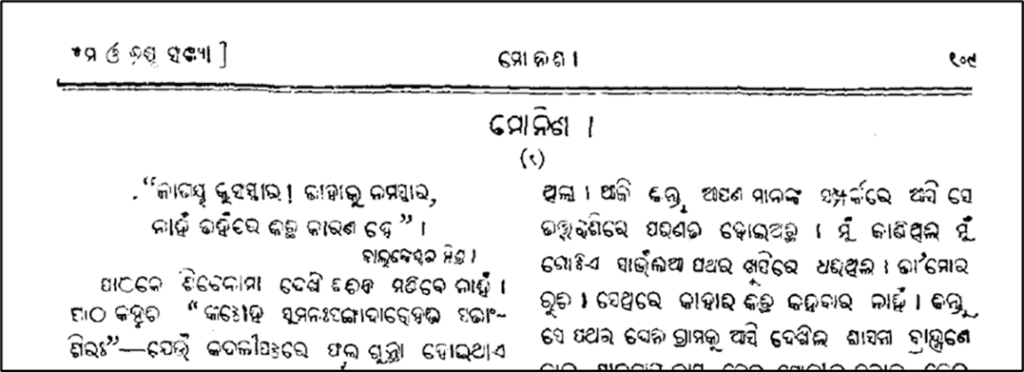
From an early age, Nilakantha rebelled against the superstitions, blind faith, and rigid rules established in the Odia society. He did not believe that the absence of precedence should limit new experiments. To demonstrate the harm caused by ignorance and superstition, he penned two articles in 1911 for the renowned magazine Mukura, titled “Mo Nisha” (My Mustache) and “Nisha”. In these articles, he described his personal experience of how sporting a moustache without a beard by a high-class Brahmin was punishable to the extreme – because there was no precedence of such action. His progressive stance was deemed so detrimental to the societal norms of the time that his case went up to Puri Mukti Mandap to determine an appropriate punishment for him.
He authored numerous essays and journal articles, routinely emphasizing the critical importance of new ideas and approaches for the progress of any society. His writings sparked an informal reform movement among Odisha’s learned youth, known as the Nisha Andolan (The Moustache Movement).
Values Taught at Satyabadi: Truth, Fearlessness, Equality
Nilakantha possessed an indomitable spirit; and he always advocated for truthfulness. He regretted that dishonesty and lies diminish human dignity, making individuals lower than other creations of God. At the Satyabadi High School, he tried to instill these values in his students – striving to make them truthful, fearless, tolerant and selfless. Furthermore, he fostered a sense of camaraderie among its students, irrespective of caste or social standing – a radical departure from the social norm of the time. Notably, Pandit Gopabandhu and Nilakantha, at Satyabadi School, arranged for students of all castes to live and dine together, long before Mahatma Gandhi championed the removal of untouchability. This progressive stance drew the wrath of the orthodox society of that region – inciting them to burn down the school.
Undaunted, Nilakantha, with other teachers and school students, immediately conducted classes under the surrounding trees and soon rebuilt the school.
He also staunchly opposed the dowry system, refusing large dowry offers for himself (as he was a bright, educated young man – very desirable as a son-in-law), and marrying a girl from a lower middle-class family.
Religious Views: Monotheism and Rejection of Ritualism
Nilakantha was a monotheist and believed in Sri Jagannath as the supreme being and the manifestation of the entire universe, but he did not believe in rigid religious rituals. He articulated his views in articles such as “Pratibha Puja O Pratima Puja” ( Worship of Talent vs. Worship of Idols). He heavily criticized fabricated religious narratives, rigid rules imposed by ignorant and unscrupulous religious heads, as well as deviant behaviour perpetrated in the name of religion. He believed that the true love of God is displayed in nature, among all its beautiful creations, and in following a righteous path. However, he also realized that most people need to believe in a Supreme being – to lift and help them in life’s ups and downs; so he advised them to keep their faith in Lord Jagannath, the Supreme creator.
Gradual Reform Through Education and Journalism
Nilakanth, being pragmatic, did not advocate for suddenly dismantling all old systems without first implementing robust replacement and gradually acclimatizing people to accept the new system, as he foresaw it would lead to chaos and confusion otherwise. So, he wanted to educate people on various social and religious issues first, and bring in gradual changes, such as in child marriage and rigid caste systems. Therefore, he resolved to achieve this through journalism; writing articles and providing examples of the harm caused by superstition, blind faith, illogical arguments, and the like. This conviction led him to found his monthly magazine, Naba Bharat. He invited articles from the free-thinking intelligentsia of Odisha, while also serving as the editor and a prolific contributor. Naba Bharat subsequently became the most renowned journal of its time, a gold standard in Odia journalism – a subject further explored in the “Journalist” article in this section.
- “I like and respect Reasoning better than plain Devotion.”
- “Manaba Dharma (Religion of Humanity) is superior to religions established by any prophet.”
(Atma Jeebanee – Nilakantha Das)
NILAKANTHA DAS: THE ACCLAIMED JOURNALIST
Pandit Nilakantha Das turned to journalism as a means of addressing ignorance, prejudice, and superstition among the uneducated and the partially educated population of Odisha in the first half of the twentieth century. He edited and contributed to four different magazines, including NabaBharat, his most influential publication and widely regarded as the gold standard of Odia journalism at the time. These publications and his role in them are discussed below.
Satyabadi magazine: Nurturing Young Minds
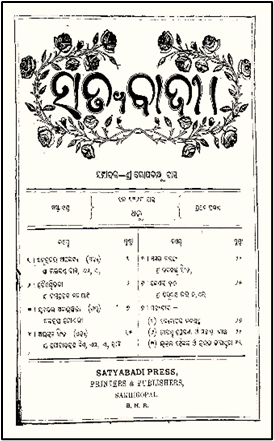
Nilakantha’s journalistic endeavors began when he was the Headmaster of Satyabadi school, and also served as the joint editor of the school’s aptly named magazine, Satyabadi. He firmly believed that exposing children to enlightening ideas through such publications from a young age could broaden their perspectives and foster a better society. Consequently, he, along with Gopabandhu and others, contributed valuable articles to the magazine. To cultivate their critical thinking, Nilakantha also organized debates and other activities for them. He published devotional songs and philosophical articles to encourage the spirituality of the students.
Besides his contributions to Satyabadi, Nilakantha also submitted articles to prominent periodicals and journals in Odisha, including Utkal Deepika and Mukur, offering his insights on many pressing issues facing Odisha at the time.
Another aspect of his journalistic role, described later in this section, is his part in alleviating the problems of the Davar famine in the Puri district in 1919-20, so that it did not take the disastrous shape of NaAnka famine of 1866.
Seba: Taking Journalism to the People of Western Odisha
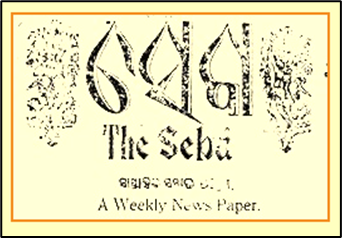
Nilakantha’s true venture into professional journalism started with the launching of a weekly paper named Seba from Sambalpur in 1921. Its focus was to keep the people of that region informed about the important happenings around the state and the country, especially the activities of the Indian National Congress party established by Mahatma Gandhi. Seba quickly gained popularity there, but its publication ceased after Nilakantha departed for Cuttack, upon Gopabandhu’s request, to aid him in Congress Party’s work – having stayed only nine months in Sambalpur.
Naba Bharat: A Medium for Bold Ideas and Free Thought
The monthly magazine NabaBharat was started by Pandit Nilakantha in June 1934, with the primary goal of promoting creative thinking and healthy discussions among the intelligentsia of Odisha – on relevant topics facing the state and the country at the time. NabaBharat was published from Cuttack, with initial financial support extended by the King of Jaypore, who was an admirer of Nilakantha from his Satyabadi days.
Nilakantha was a member of the Central Parliament in Delhi from 1935 to 1945, and was thus frequently absent from Cuttack; yet he often managed his editorial responsibility through postal correspondence.
Due to the erudition, critical thinking, and dedication of Pandit Nilakantha, Naba Bharat became the most renowned magazine of its era, setting the Gold Standard for journalism over the years. It evolved into an institution, attracting thought-provoking articles from many distinguished personalities of Odisha. Nilakantha personally reviewed every submission, publishing articles solely on their merit, irrespective of the author’s renown. He also penned the magazine’s editorials. Some of his own articles in the magazine were Bidhatanka Shrusti (The Lord’s Creation) and Manaba Pragatira Dhara (The Principle of Man’s Progress.)
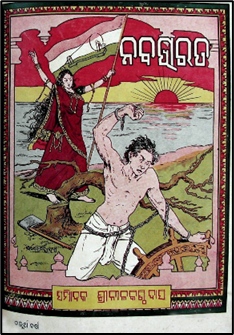
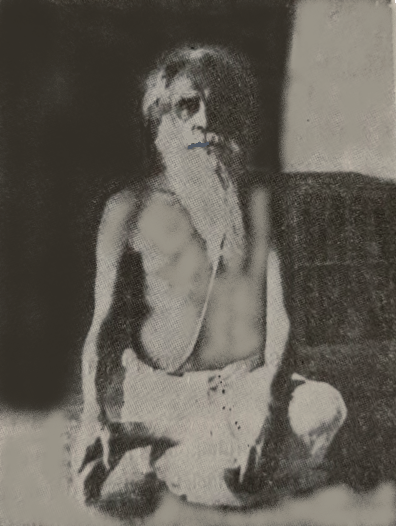
The monthly Naba Bharat also ran into financial difficulty halting publication in 1942, but was successfully revived from October 1946 to March 1951. A first-hand, intriguing account of why even the revived edition stopped publication may be found here. <TBD: Link to article “Shesha Bhul” by Laxmidhar Nayak in the set of Interesting articles.>
Nilakantha’s true venture into professional journalism started with the launching of a weekly paper named Seba from Sambalpur in 1921. Its focus was to keep the people of that region informed about the important happenings around the state and the country, especially the activities of the Indian National Congress party established by Mahatma Gandhi. Seba quickly gained popularity there, but its publication ceased after Nilakantha departed for Cuttack, upon Gopabandhu’s request, to aid him in Congress Party’s work – having stayed only nine months in Sambalpur.
Lokamata: A Voice for Odisha’s Political Consciousness
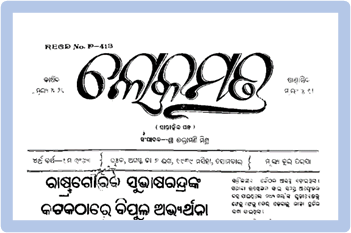
Pandit Nilakantha published the Odia weekly newspaper, called Lokamata, from 1936 to 1941, with Mr. Chintamani Mishra as the editor. It was initially a political newspaper; its primary function was to disseminate the political thoughts and opinions of Odisha’s citizens for the benefit of state Congress leaders. However, it soon broadened its scope, expanding its coverage to inform the Odias about detailed state and national situations. It also published important international news. (A detailed analysis of the news presented in Lokamata offers a clear picture of the internal turmoil and political dynamics within the Congress party during that period.)
The Davar Famine Report: Nilakantha’s Investigative Journalism (1919-1920)
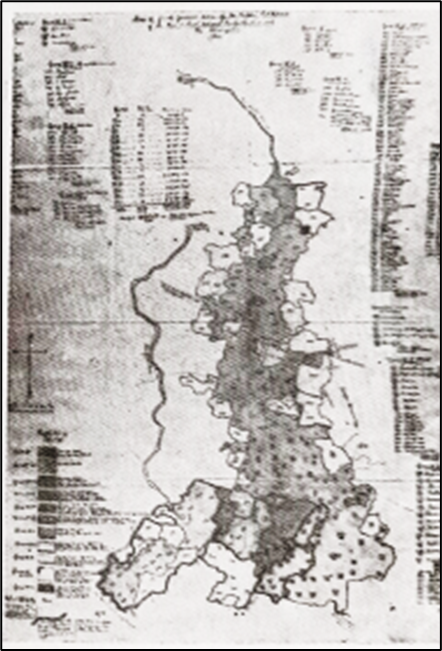
The proof of Nilakantha’s journalistic ability extended well beyond the publication of renowned journals. It was most clearly reflected in his role in drawing the attention of the British administration to the devastating famine in the Davar region of the Puri district during 1919–1920, so that it did not assume proportions comparable to the catastrophic Na’anka famine of 1866.
At the time, Nilakantha was a teacher at the Satyabadi School. With Pandit Gopabandhu’s consent, he travelled to the affected region along with a few students, carrying whatever relief materials were available. What he witnessed there was deeply disturbing: in village after village, people were dying in large numbers, yet no government assistance had reached the area Nilakantha carefully mapped the drought-stricken villages and compiled detailed information on the conditions prevailing there. He sent this documentation directly to the Governor of the Bihar–Odisha Province. Based on this information, the Governor prepared a route plan and dispatched officials along with food and other relief supplies to the affected areas. Nilakantha also facilitated the appearance of local villagers as witnesses before the Governor, who reportedly expressed his regret, stating: “What ought to have been done, has not been done.” (Reference: Nilakantha’s autobiography, p. 96)
Nilakantha remained in the Davar region for nearly two months, assisting with relief work. Subsequently, he travelled to Calcutta to print a detailed report on the famine and also conveyed the information to The Searchlight newspaper in Patna. A poignant account of this famine and Nilakantha’s efforts may be found in the article “Davarar Chhapa” included in Nilakantha Smaraki, Volume 1 (p. 54).