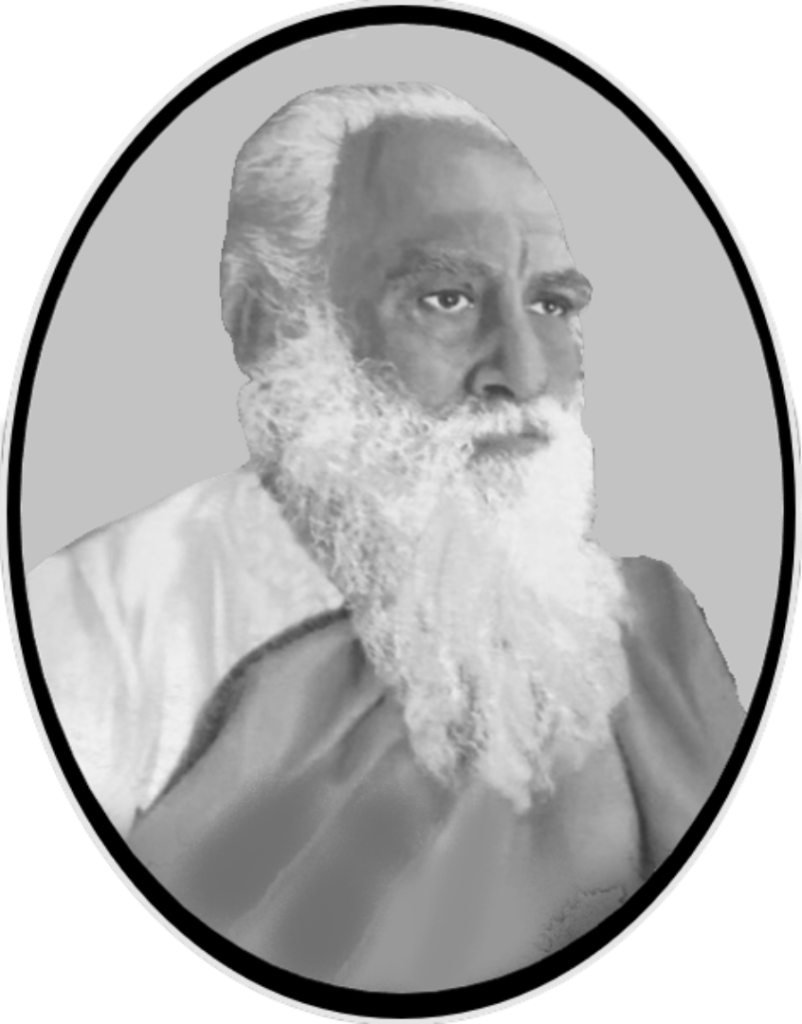
In National Sphere
MOVING BEYOND SATYABADI (1920 -1945)
A Call to National Service
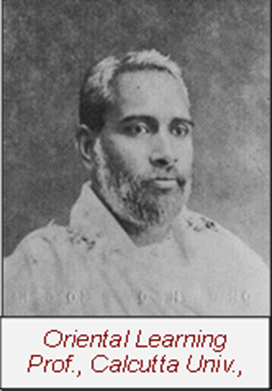
In 1920, Pandit Nilakantha was offered a professorship in Oriental Learning and Language at Calcutta University. With Gopabandhu’s consent, and Pandit Godabarish as the headmaster of his beloved Satyabadi school, Nilakantha accepted the offer and joined the university in September 1920.
However, the rising tide of Mahatma Gandhi’s freedom movement soon captured his spirit. Nilakantha found it impossible to remain confined to academic life while the nation was awakening. After only three months at the university, he resigned from his coveted position.On January 6, 1921, he joined Gopabandhu in Sambalpur, leaving his young family with his father-in-law and dedicating himself fully to India’s independence struggle. This decisive break marked his unwavering commitment to the fight for freedom.
Building the National Movement in Odisha (Sambalpur - 1921)
Organizing the Movement
Upon reaching Sambalpur, Nilakantha took major responsibility for developing the organizational framework of the independence movement in Odisha. He also established a National High School and launched a weekly magazine, Seba, to spread patriotic ideas and energize public sentiment. Gopabandhu relied heavily on him, as he himself had been serving in the Bihar–Odisha Council since 1917.
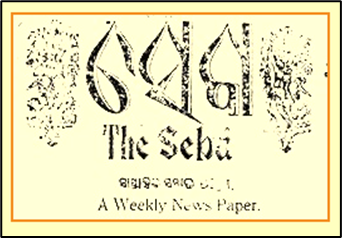
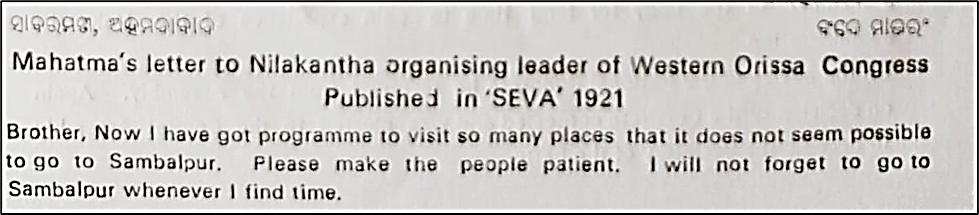
From Sambalpur, Nilakantha invited Mahatma Gandhi to visit the region. Gandhi could not come immediately, but responded with a letter (shown in the original version as published in Seba). He later visited Odisha in March of 1921 and held several meetings across the province.
Leadership, Struggle for Indian Independence, and Imprisonment
Nilakantha remained in Sambalpur for nine months before being called to Cuttack to take an active role in the newly formed Utkal Pradesh Congress Committee, established by Gopabandhu. His responsibilities increased further when Gopabandhu was arrested, leaving Nilakantha to lead many activities alone. Nilakantha himself was later arrested and jailed in Hazaribagh.
Jail Life and Association with National Leaders
Over the years, Nilakantha was imprisoned four times—in 1923, 1930, 1931, and 1932—amounting to two and a half years in jail. These imprisonments stemmed from his participation in civil disobedience movements, including the Salt Satyagraha. During his last imprisonment in Hazaribagh, he suffered from severe health problems and was transferred to Patna Jail for ulcer treatment.
In jail, he came in close contact with great Indian leaders such as Madan Mohan Malaviya, Acharya Kriplani, and Dr. Rajendra Prasad, forming lasting intellectual and personal bonds. He wrote deeply reflective works, including his philosophical treatise on the Gita, while in jail. He also taught grammar and other lessons to less educated prisoners there.
Personal Tragedies: Death of Young Children
Nilakantha paid a heavy personal price for his commitment. During his second jail term, he learned of the death of his second daughter, Basanti, from a childhood illness — news that followed the earlier loss of his eldest daughter, Bharati, while he had been campaigning in Sambalpur. On both tragic occasions, he could not return home to comfort his wife, Smt. Radhamani Debi, at such crucial times.
Nilakantha in Delhi Central Assembly (1924-1930)
Entry Into National Politics
As the Government of India Act of 1919 expanded Indian participation in government, Nilakantha consulted Gopabandhu, contested the election from the Odisha (then called Orissa) faction of the Bihar–Orissa province, and won as a member of the Swaraj Party, a wing of the Indian National Congress. The Party (also called the “Pro-changers”) was led by Pandit Motilal Nehru and sought to work within the British Government to push reforms that would help the oppressed Indian citizens. The other wing, called the “No-changers”, was led by Mahatma Gandhi, who advocated complete non-cooperation with the British.
Nilakantha’s important contributions at the Delhi Central Assembly, especially his vital role in making Odisha a linguistically independent Province, is discussed as a separate item in this menu section
A STRONG VOICE IN DELHI PARLIAMENT
When the 39-year-old Nilakantha arrived in Delhi Assembly, he stepped onto a national stage where most members held little to no knowledge of Odisha, and many had never even encountered an Odia person. The very location of Odisha was often unknown to them!
He was also one of a very few academician among mostly all lawyers there. Nevertheless, his clarity, assertiveness, and scholarship soon made him a noteworthy voice in the Assembly and the strongest advocate for Odisha’s separate statehood.
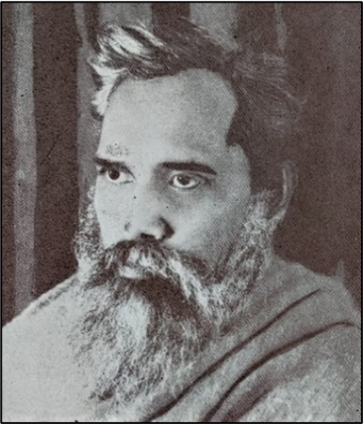
Central Assembly
Roles and Achievements on the National Stage
Secretary of the Swaraj Party
Nilakantha was soon elected as the Secretary of the Swaraj Party, under the Presidency of Pandit Motilal Nehru. Many members of the party were well-known veterans of Indian national politics.
This was a significant achievement for Nilakantha, and greatly enhanced Odisha’s visibility in national politics.
But it was not entirely surprising. Nilakantha was well-known to many members there. His association with many Bengali intellectual and political circles dated back to his college years and had deepened through his frequent participation in political meetings in Calcutta, then a major center of political thought and activity. Moreover, during his imprisonment in the Hazaribagh jail in 1922, Nilakantha had come across other political prisoners from different parts of the country and had developed rapport with them.
This cross-regional trust helps explain Nilakantha’s election as Secretary of the Swaraj Party, despite the fact that he was neither a lawyer nor a nationally prominent figure at the time.
Nilakantha, as a prominent academician, also served as a member of the Delhi University senate for seven years, being appointed by the Viceroy of India to represent the Delhi Parliament.
Appointments to Other Powerful Committees
Soon, due to his precision in mathematics and keen awareness of the plight of the poor, was:
- Appointed to the powerful Indian Railway Purchase Committee,
- Elected to the Central Assembly Public Accounts Committee, and
- Became President of the All-India Postal Union in 1927
- He served diligently in these positions during his tenure there.
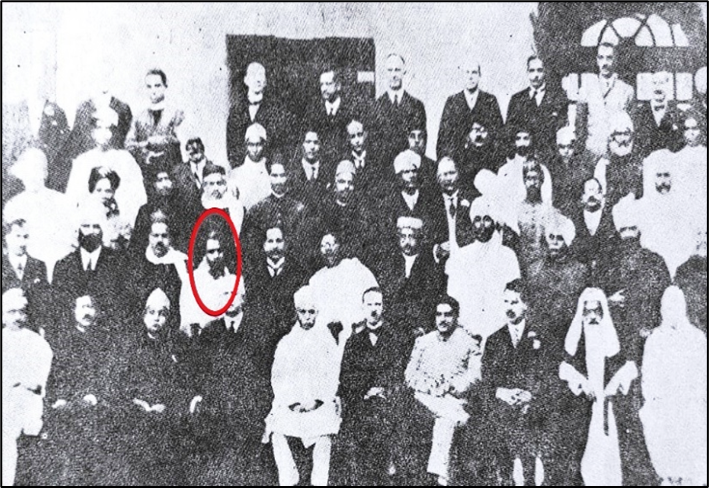
Boycott of Elections (1930–1935)
From 1930 to 1935, Nilakantha did not contest the Assembly election, as the Congress had called for a complete boycott in protest against British repression and in support of the Salt Satyagraha. These years saw widespread imprisonment of Congress leaders, including Gandhiji, and Nilakantha.
A CHAMPION FOR ODISHA AND THE POOR (1924 -1945)
Nilakantha's Activities in Delhi Central Assembly
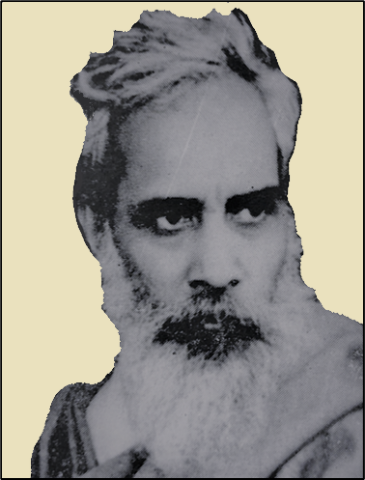
The Lion of Odisha
Pandit Nilakantha Das’s work in the Delhi Central Assembly spanned two decades, during which he addressed a wide range of issues. His efforts were not limited to matters concerning Odisha alone; he also focused on many challenges faced by Indians across the country and even those experienced by people of Indian origin living in Africa. (Additional details on his wider national work can be found in the article by Ex. Railway Minister of India P. C. Chunder. [Ref 1]. Because of his energetic, clear, and persuasive arguments on the Assembly floor, his colleagues often referred to him as the “Lion of Orissa.” [Ref 2: Biswambhar Pandey]
Champion of Worker’s Rights
(A Labour Leader in the Assembly)
During his first term in the Delhi Assembly (1924-1930), Pandit Nilakantha brought to the Assembly’s attention the hardships faced by poor and vulnerable groups under British rule, and demanded the Government’s response in the form of explanation, reforms, and improvements.
Key causes he advocated :
• Treatment of Political Prisoners: Addressing the inhumane conditions faced by those incarcerated for their nationalist beliefs.
• Welfare of Assam Tea Garden Labourers: Fighting for the rights and better treatment of exploited plantation workers.
• Support for Calcutta’s Dock and Jute Mill Workers: Advocating for the rights of industrial laborers in major urban centers.
• Overcrowding in Third-Class Railway Compartments: Highlighting the everyday hardships faced by the common populace due to systemic neglect.
• Solidarity with the Golmuri Tin Plate Strikers: Lending crucial support to workers engaged in industrial action in Jamshedpur.
(An acknowledgement of Pandit Nilakantha’s official and personal help for the sustenance of Indian Steel Industries in 1929 is shown at the end of this article.)
Pandit Nilakantha’s contributions were recognized widely in Delhi; as a result, he was:
• Appointed to the powerful Indian Railway Purchase Committee,
• Elected to the Central Assembly Public Accounts Committee, and
• Became President of the All-India Postal Union in 1927
Demanding Justice: For Salt Tax Abolition in Odisha
Nilakantha’s Pioneering Stand (1929)
One of Nilakantha’s most impactful yet lesser-known achievements was his demand in 1929 for the abolition of the Salt Tax in Odisha, which had been unjustly doubled by the British Government in 1923. He argued forcefully that this heavy tax placed an unbearable burden on the poorest citizens, especially in coastal Odisha, where salt making was a traditional livelihood. He warned the British Government that a rebellion would erupt if this unjust tax was not withdrawn. His compelling arguments on this bill are documented in [Ref 4]. Though ignored initially by the Government, Nilakantha’s arguments deeply influenced Mahatma Gandhi, who later turned the issue into a national movement.
Gandhiji Making it a National Issue
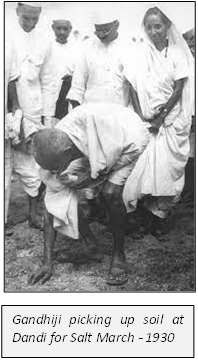
Inspired by Nilakantha’s arguments, Mahatma Gandhi made the Salt Tax a central issue of civil resistance, launching the Salt Satyagraha in 1930 [Ref 4]. Gandhi first considered Odisha as the site of the march before choosing Gujarat, being more familiar with his home state, and started his iconic civil-disobedience movement against the British in 1930 with the famous Dandi Salt March.
Nonetheless, Odisha joined the movement wholeheartedly. Nilakantha and many Odia leaders participated in the civil disobedience and went to jail for their defiance.
Modern Recognition
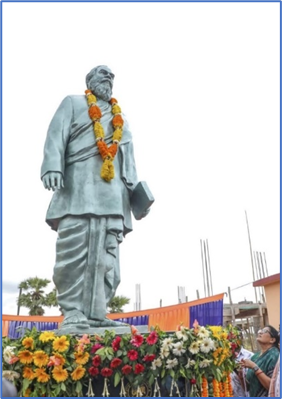
For decades, Nilakantha’s foundational role in bringing attention to the Salt Tax, especially on the poor coastal people of Odisha, remained little known even in Odisha itself. Recently, however, the Government of Odisha installed a statue of him in the township of Kuhudi near Chilika Lake, honouring both his contribution to the Salt Movement and the sacrifices, including imprisonment of local residents who joined him there.
A Courageous Stand for Subhas Chandra Bose (March, 1936)
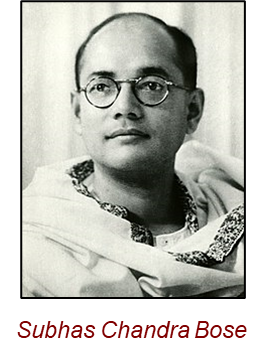
In 1933, Subhas Chandra Bose traveled to Vienna, Austria, seeking medical treatment for health issues he developed during five years of imprisonment for his stance against British rule. Upon learning of Subhas’s intention to return to India in 1936, the Government opposed it, worried about his radical views and political influence.In a remarkable act of courage, Nilakantha introduced a bill on March 23, 1936, demanding that Bose be allowed to return to India. Despite opposition from some Congress leaders —as well as from Home Secretary M. G. Hallet — the bill narrowly passed (62–59). Subhas returned in 1938, marking an important moment in India’s freedom struggle. (For a detailed view of the relationship between Netaji and Nilakantha, see the article Pandit Nilakantha and Netaji Subhas: On The Nation’s Battlefield .)
The Fight for a Unified, Independent, Full Odisha Province (1927-1936)
This was the main reason why Pandit Nilakantha went to the Delhi Central Assembly in 1924. His extra-ordinary efforts and success in this area is discussed in detail in separate sections under this menu. (TBD: Link to the articles.)
Resolutions and Publications
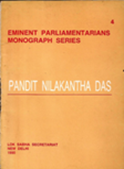
During his sixteen years (between 1924 and 1945), Nilakantha introduced many resolutions in the Indian Parliament aimed at improving the lives of Indian citizens. Some of his powerful resolutions are preserved in a publication from the Delhi Parliament Library, under the Eminent Parliamentarian Monograph Series. [Ref 3]. Others are available in digital format at the Delhi Parliament Library and can be downloaded from there by interested researchers. The Odisha Government has also compiled some of his speeches into a book, titled “Speeches and Remarks of Pandit Nilakantha Das in Central Legislative Assembly (TBD: Link>) for the benefit of present-day legislators.
TOWARDS AN INDEPENDENT, FULL ODISHA PROVINCE (1927-1936)
and a linguist, but also as Odisha’s voice in Delhi during a
critical phase of its formation.
Dismemberment of Odisha under the British Rule
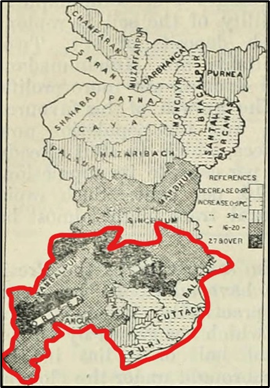
During British rule, Odisha was a marginalized, dismembered, and underdeveloped region, vulnerable to frequent floods and famine. Its generated revenue was not deemed enough for Odisha to be viable as a standalone province with required administrative and other infrastructure. From 1912, its coastal areas, along with Sambalpur, were attached to Bihar forming the Bihar-Odisha Province. Other areas were under Bengal and Madras/Andhra. Odia-speaking people in these annexed areas were reduced to minorities, leading to decline in their economic strength and loss of their cultural identity Because of the Odia-speaking region’s lack of revenue, most prominent leaders like Madhu Babu and Gopabandhu were initially open to a compromise, namely: to enact the unification of all Odia-speaking tracts as an amalgamated Odisha sub-province, to be administered under a neighboring state (such as Bengal or the Central Province).
Nilakantha’s Uncompromising Stand against an “Odisha Subprovince”
However, Pandit Nilakantha adamantly refused to accept this compromise. A highly learned man, he possessed an intimate understanding and profound pride in Odisha’s rich history, vibrant culture, distinctive art, and unique language. He courageously demanded that Odisha deserved to be an independent province without precondition based on its cultural and linguistic heritage, asserting that funds for its sustenance could be arranged.
On February 7, 1927, Nilakantha introduced his well-known resolution in the Delhi Parliament with this demand. In spite of its strong support from many quarters, he withdrew the bill later, rather than seeing it defeated – since the neighboring states were unwilling to relinquish claim to Odia-speaking regions under their possession. Nevertheless, that was the first formal introduction of such a demand in the Central assembly.
Death of Gopabandhu and Madhu Babu
After the sudden death of Pandit Gopabandhu in 1928, and the retirement of Madhu Babu from active politics from the late 1920s, many related political responsibilities also fell on Nilakantha – including canvassing with other Odia leaders in the dismembered areas for the legal consent of their residents to merge with Odisha.
After passing numerous hurdles, and providing many testimonies (as the Odisha Pradesh Congress Committee President) before various British committees, Nilakantha and his co-leaders finally saw their long-cherished dream come to fruition on April 1, 1936, through the recommendation of the Attlee Committee. Odisha (then called Orissa) became an independent province on linguistic basis, with the inclusion of southern districts, and a grant of Rs. 40 lakhs by the British Government to start its new life.
A Disappointment for Many Odias
When Odisha became an independent province, many people expected Nilakantha to serve as its first Chief Minister. But due to political maneuvering and technical objections on minor grounds by some ambitious leaders in Odisha, he was unjustly denied this opportunity — something deeply felt by many Odias – knowing Nilakantha’s contributions and abilities, and the progress that might have been achieved for the state under his leadership.
However, undaunted by this, Nilakantha continued to serve his state and the nation as a parliamentarian, to his fullest ability, until 1945.
This monumental achievement, with Nilakantha’s numerous contributions along with those of Madhu Babu and Gopabandhu, and his special role in the unification of the Southern Odisha regions, is discussed in greater detail and with extensive references under its own menu heading on this website.